Published 2026-10-30
VPS Identity Checks: What to Verify Before Ordering
Before paying for a VPS, check whether the provider may require identity verification and how cancellation or refunds work if you cannot complete it. Ordering a server, passing a payment check, and receiving an activated service can be separate steps.
In this guide
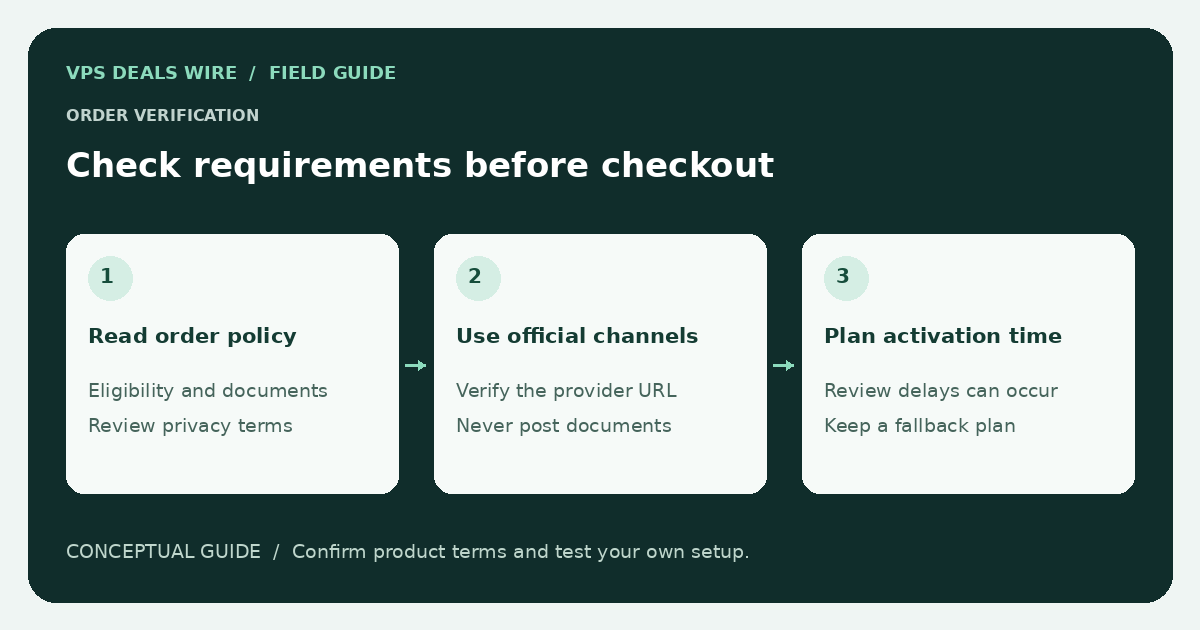
Requirements vary by provider, payment method, location, and order circumstances. This guide does not claim that every host requires documents or that a particular host will approve an order. Use the provider's published policy and official support channel.
Read the policy before entering payment details
Look for verification, fraud-review, activation, and refund terms. If the policy is unclear, ask what information might be requested and whether an unactivated order can be cancelled. Keep the response and applicable terms with your order records.
Do not interpret “instant” marketing language as a promise that no review can happen. Equally, a pending review is not on its own evidence that a business is fraudulent. Assess the full situation using the provider-verification checklist.
Verify the submission channel
If documents are requested, confirm the request through the provider's authenticated dashboard or an independently verified support route. Check the domain carefully. Do not send identity documents to an unrelated chat account or a link that merely resembles the provider's site.
Ask which information is necessary, how it is used, and what retention policy applies. Do not provide extra documents just because someone asks informally. Follow legitimate requirements honestly; this guide does not suggest bypassing a verification process or giving false identity information.
Understand what happens to the order
Find out whether the provider has captured a payment, placed an authorization, or simply created an invoice. Ask when billing begins if activation is delayed and what process applies if the order is rejected. Refund eligibility and payment-release timing are not interchangeable concepts.
Use the refund guide to identify the relevant conditions. Do not assume an unactivated service automatically qualifies for every advertised money-back offer.
Keep the purchase reversible
Avoid migrating a live site or cancelling an existing host before the replacement is active and tested. Keep the application, backups, and domain access under your control. Once activated, validate the product and region you actually received before moving production data.
Record the order reference, support conversation, and current status without publishing private documents or financial details. If you decide not to continue, use the provider's formal cancellation route and confirm what remains active.
Compare candidates through the provider directory, then verify the final purchase conditions at the source. A cheap headline amount is only useful when the order, activation, and ongoing terms fit your requirements.