Published 2026-10-09
Paying $80/Month for a VPS? Here's What $5, $10, and $20 Actually Buy
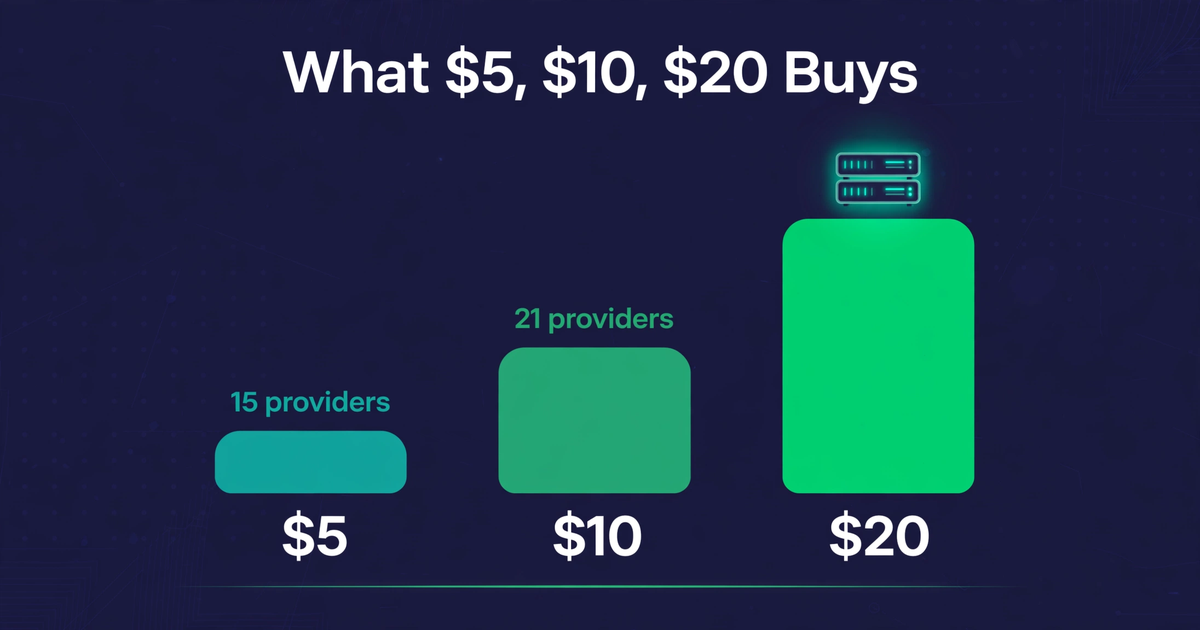
Short answer: you can cut that $80 bill by 90% and still get a real monthly-billed VPS — but only if you know which traps to dodge. In our 2026-10-08 snapshot of 214 live VPS offers across 31 providers (190 priced in USD), 15 providers sell a monthly entry plan at $5 or under, 21 providers at $10 or under, and the median entry price is just $4.54/month. The catch, as one r/VPS commenter put it, is that a cheap box with weak bandwidth limits "can end up being way worse than the $80 box" for the wrong workload. This guide shows exactly what each budget buys, and the three traps that turn a $5 downgrade into an expensive mistake.
In this guide
| Monthly budget | How many providers' entry plans fit | Real examples (scraped 2026-10-08) |
|---|---|---|
| $5 | 15 of 23 USD providers | Hostens $1.00, Latitude.sh $1.23, BuyVM $1.25, IONOS $2.00, Virmach $2.00, RackNerd $2.24, Cherry Servers $2.34, DigitalOcean $4.00, Kamatera $4.00, RamNode $4.00, DreamHost $4.41, OVHcloud $4.54, AccuWebHosting $4.99, KnownHost $5.00, Liquid Web $5.00 |
| $10 | 21 of 23 USD providers | everything above, plus CloudCone $5.20, SSDNodes $5.50, Hostinger $6.49, Hostwinds $7.14, InMotion Hosting $9.99, ScalaHosting $10.00 |
| $20 | all 23 USD providers | everything above, plus HostDare $12.99, BandwagonHost $19.99 |
| $80 | every provider, most plans | this budget reaches high-end rows in our data — RackNerd $139.00, ScalaHosting $244.95, DreamHost $810.00 |
Every price above was scraped from the provider's own pricing page on 2026-10-08. "Entry plan" means the cheapest monthly-billed row we tracked for that provider; 18 sub-dollar rows (hourly rates, storage slabs, add-on IPs) were excluded from the provider counts because they are not usable monthly plans — see the trap section below. 214 live offers, 31 providers, 190 priced in USD, median monthly offer $17.54, median entry plan $4.54.
The $80 question that started this
On a recent r/VPS thread titled "Cheaper and stable VPs options," a user paying about $80 a month asked for cheaper suggestions in the US. The top-voted reply was a joke — "how about this $1.50/mo instance" — and it makes a real point: without knowing the workload, any price quote is a guess. The most useful reply went one layer deeper: before switching, figure out whether the server is only receiving and relaying RTMP streams or actually transcoding them. Transcoding is CPU-heavy; relaying is bandwidth-heavy. Those are two completely different shopping lists.
That is the first thing a downgrade has to get right. The price tiers above tell you what $5, $10, or $20 can buy — but only your actual CPU, RAM, and bandwidth usage tells you which tier you can safely land on. Check your current server's usage graphs before you read another pricing page.
Trap 1: the sub-dollar rows that aren't real plans
Our 2026-10-08 snapshot contains 18 sub-dollar rows that look like "$0.01" plans on a pricing page: DigitalOcean $0.01 (per-second billing rows), Kamatera $0.01 (hourly rate), CloudCone $0.01 ("plan per month" teaser rows), plus storage slabs at $0.05–$0.30 per GB-month. These are hourly-billing or add-on rows, not $1/month servers. One LowEndTalk commenter summarized the math bluntly: hourly adds up too expensive per month. When we computed the tier table above, we threw these rows out — your $5 budget only counts if the plan is actually billed at $5 a month.
Trap 2: weak bandwidth that costs more than the $80 box
This is the trap the r/VPS thread nailed. A commenter warned that a cheap VPS with weak bandwidth limits can end up being way worse than the $80 box for streaming. The $80 plan usually bundles generous or unmetered transfer; the $5 plan often includes a fixed monthly allowance, and overage fees — where they exist at all — are rarely printed next to the headline price. If your workload pushes real traffic (media, downloads, proxies), the bandwidth line on the pricing page matters more than the CPU line. A plan that is $75 cheaper on paper can cost more the month you exceed the cap.
Trap 3: the advertised price isn't the price you keep
Yesterday we published a full breakdown of drip pricing in cheap-VPS ads: providers that advertise $6.49 and renew at $11.99, or show "first 2 years" cards next to auto-renew cards at 2.5x the price. The $5-tier providers in the table above are the same pages — always scroll to the renewal line before you compare. An $80 bill you understand beats a $5 bill that surprises you.
The downgrade checklist
- Measure first. Pull 30 days of CPU, RAM, and bandwidth usage from your $80 box. If CPU sits under 20% and RAM under half, you're over-provisioned and a $5–10 tier is a realistic target.
- Classify the workload. Relaying streams, static sites, small APIs, and personal VPNs are bandwidth/RAM questions. Transcoding, compiling, and busy databases are CPU questions — and cheap shared cores are where downgrades go to die.
- Read the bandwidth line, not just the price line. Note the monthly transfer allowance and what happens at the cap (throttle vs. overage fee vs. cutoff). If the page doesn't say, assume the worst.
- Buy monthly first. The cheapest annual prices in our data assume 12 months upfront — don't lock in until the box has survived a full month of your real workload.
- Check the renewal number. See our drip-pricing guide: the intro price is not your price.
Our take
If your $80 box is running a blog, a small store, or a dev server at low utilization, staying there is paying a convenience tax — the data above shows you can get a monthly plan from a known provider for $4–$10 and pocket the difference. But if that $80 exists because of sustained CPU or heavy egress, don't downgrade on price alone: the wrong $5 plan will cost you more in overages, throttling, and migration pain than the box you were trying to leave. We track 214 live offers so you can compare the real numbers; the workload math is on you.
Data: vpsdealswire.com price tracker, snapshot 2026-10-08 (214 offers, 31 providers, 190 USD rows). Prices change; every figure above is dated.
Related reading: drip pricing breakdown · what a VPS costs per month · renewal prices